Imaging

Bone density measurement (DEXA)

Strong bones help you stay active and independent. A DXA scan measures bone mineral density, giving your clinician a clearer basis for assessing fracture risk and planning bone-health care before a fracture occurs.

Showing availability for

Listed at Prague. The exact scope, preparation, clinician and price are confirmed with the team before booking.

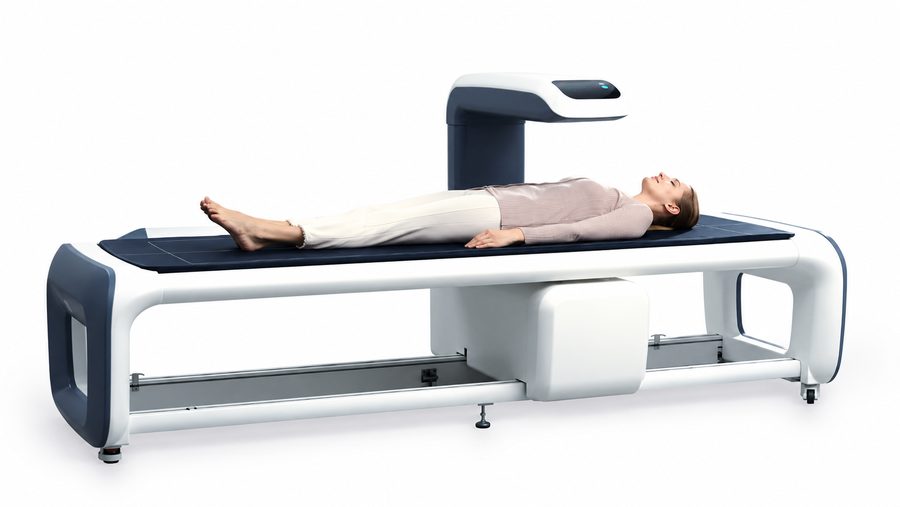
Educational illustration of a person lying on an open DXA examination table

At a glance

What this involves at Prague

Available at this clinic

Scope and price are confirmed with the team before booking. Where a published price exists for your clinic, it is shown on the programme or clinic page.

Method
Low-dose dual-energy X-ray measurement, usually at the lumbar spine and hip.
What the report contains
Bone mineral density in g/cm², the relevant T- or Z-score, measured regions and clinical interpretation.
During the scan
You lie on an open padded table while the detector moves above the measured area. No injection is normally needed.

The exact test or procedure, preparation, clinician and price are agreed for your location before booking.

In detail

Why bone density matters in your care

Bone loss can progress without obvious symptoms. In HLC care, the result helps connect bone health with strength, balance, nutrition, hormonal history and medication use. It can change the priority of resistance exercise, fall prevention or a specialist assessment.

The decision to scan depends on your risk profile. A previous low-trauma fracture, menopause, long-term use of medicines that affect bone, or a relevant medical condition may make the question more important.

How the examination works

The team reviews your history and positions you for each region. A support under the legs may be used for the spine, while the foot is positioned differently for the hip. Keeping still helps the measurements remain reliable. DXA is an open examination rather than a tunnel scan.

A scan commonly takes around 10–30 minutes. This is general examination guidance; the clinic confirms your appointment length, measured sites and whether the result consultation is part of the booking.

What the numbers mean

Bone mineral density is the measured amount of mineral projected over an area of bone. A T-score compares it with a young-adult reference; a Z-score compares it with an age-appropriate reference. Which score guides interpretation depends on age and clinical context.

In postmenopausal women and men aged 50 or older, T-scores are generally used for bone-density classification. In younger adults, Z-scores usually provide the more appropriate comparison. The score does not, by itself, tell us whether or when a fracture will happen.

Before your visit

Bring previous bone-density reports and a list of medicines and supplements. Tell the team about possible pregnancy, recent contrast or barium examinations, fractures, implants or spinal surgery. Wear comfortable clothing without metal near the scan area and follow the imaging centre’s instructions about calcium supplements.

Turning the report into next steps

Your clinician combines the result with fracture history and other risks, then discusses practical bone-health measures and whether further tests or treatment are needed. Repeat scans are most useful when they can influence care. Small changes between scans may reflect measurement variation, so comparable equipment and the facility’s precision matter.

Illustrative example

Reading a bone-density report

An illustrative example created to explain the report or care plan. Values and findings are fictional, are not personal results and are not treatment targets. Your report depends on the agreed service.

Illustrative example — fictional values, not a personal result, not a clinical target and not a normal range.

Example regional measurements

Example regional measurements
RegionBMD (g/cm²)T-score
Lumbar spine L1–L40.950−1.4
Total hip0.850−0.8
Femoral neck0.710−1.2

What the report describes

Illustrative report structure
MeasureIllustrative valueWhat it would indicate
Measured regionLumbar spine L1–L4The report identifies the region used for the measurement and notes any vertebrae excluded from analysis.
T-score−1.4 (illustrative)A comparison with a young-adult reference. Clinical classification applies only in the appropriate age and clinical group.
Follow-up comparisonSame region, comparable methodA change is interpreted against the measurement precision, alongside your history and care plan.

Illustrations

Explanatory pictures

These are conceptual illustrations drawn to explain the service. They are not photographs of our clinics or of equipment we hold.

Educational illustration of a person lying on an open DXA examination table
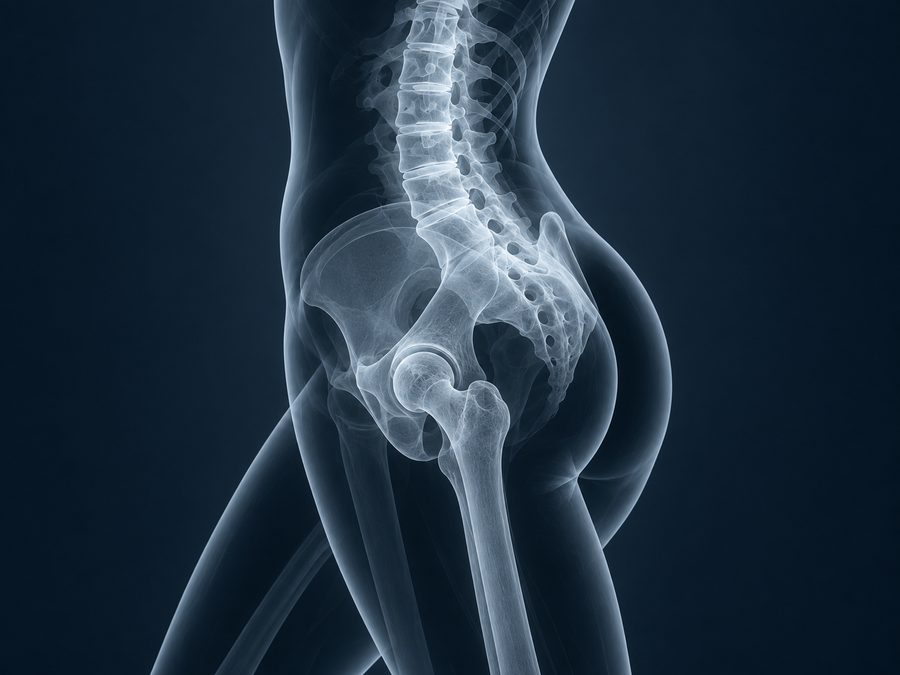
Educational illustration of the hip and lumbar spine measured in bone densitometry

Questions people ask

Related services

Often considered alongside this

Measurements and function

Body composition and muscle strength

Understand your body composition as one part of your health assessment. The team confirms the measurement method and any accompanying strength assessment at your selected clinic.

Available at this clinic
Service details →

Ask about Bone density measurement (DEXA) at Prague

Listed at Prague. The exact scope, preparation, clinician and price are confirmed with the team before booking. Your choice of service and clinic is carried through to the next step.

Request a private consultation